Philip GustonWriting and Talks
Philip Guston was widely recognized as an inspiring and dedicated teacher, once described by a colleague as a “zealot possessed by art.” He was known for engaging his students in freewheeling exchanges, offering insights into art, literature, and philosophy. Guston notably taught from his own experiences with the creative process, encouraging authenticity of self-expression and making students feel their ideas were worth pursuing. Many decades after his death, some of his students can still recall his critiques and their enduring impact.
Guston held teaching positions at the University of Iowa, Washington University in St. Louis, New York University (NYU), Pratt Institute, the New York Studio School, and Boston University. He served as a guest critic at Columbia University, the Yale Summer Art School in Norfolk, Connecticut, and at other institutions. While regular teaching took him away from his studio, he came to enjoy his monthly visits as a Professor of Art at Boston University in his later years (1973-1978), finding his exchanges with painting students a welcome respite from the isolation of Woodstock.
Beyond the classroom, Guston was a voracious reader, whose many essays and personal statements explored profound questions about painting and the creative process. Also notable were the collaborative “poem pictures” created during his last decade with poets Bill Berkson, Bill Corbett, Clark Coolidge and his wife Musa McKim, among others.
A member of the National Institute of Arts and Letters, Guston's dedication as an educator was acknowledged through awards and honorary degrees, including an honorary doctorate from Boston University, the Distinguished Teaching of Art Award from The College Art Association and the Creative Arts Award from Brandeis University.
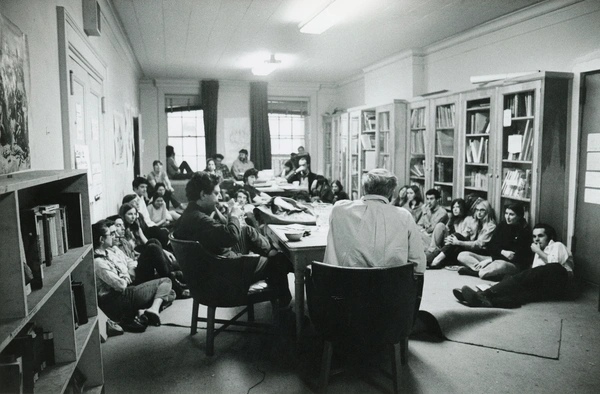
Philip Guston at New York Studio School, October 23, 1968
Photograph courtesy of the New York Studio School
On Piero della Francesca
Lecture
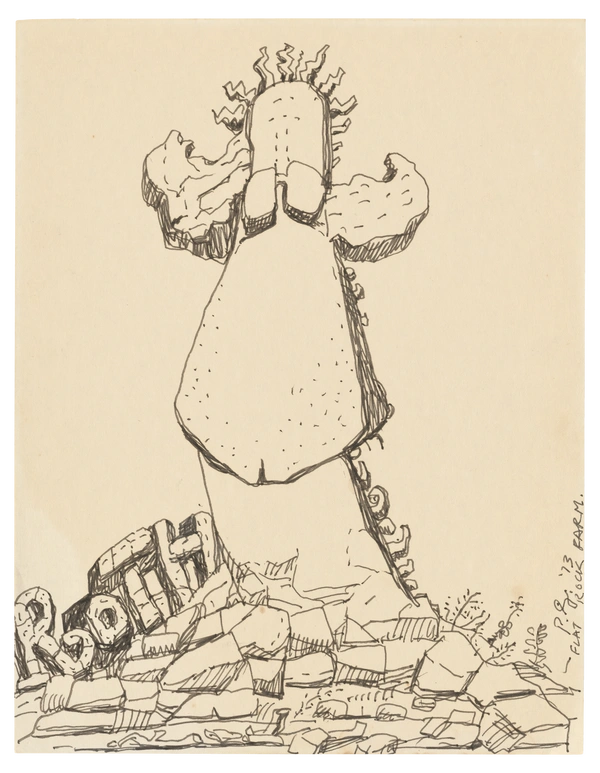
On The Nixon Drawings
Lecture
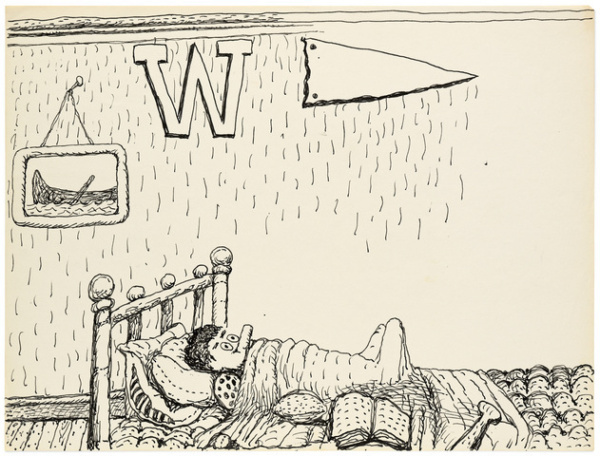
Writing and Speaking by Philip Guston
On Survival: Painting is a Court
Lecture
I said something spontaneously, which I still, like I said, that painting was a court. I mean, not a Louis 14th court, a legal court where, but unlike a court, the painter, the artist is his own witness. He's his own defendant. He's his own prosecutor. Prosecutor, and he's his own judge. The one-man court. That's the load that you carry. And I think to be an artist means to be always in court in that condition.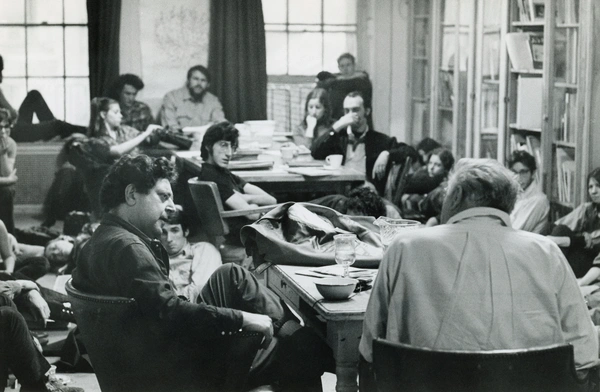
A Conversation with Harold Rosenberg
Lecture
In the fifties, when I was doing certain pink pictures, people would talk about a certain beauty, how seductive they were. It was though they weren't crude, you see. And speaking of whether I had planned this beauty, I remember in the late fifties when the work started getting blockier and heavier, John Cage, who liked the work of the early fifties, was very upset, and he said, “How could you leave that beautiful land?” I mean, it was a beautiful land but I left it.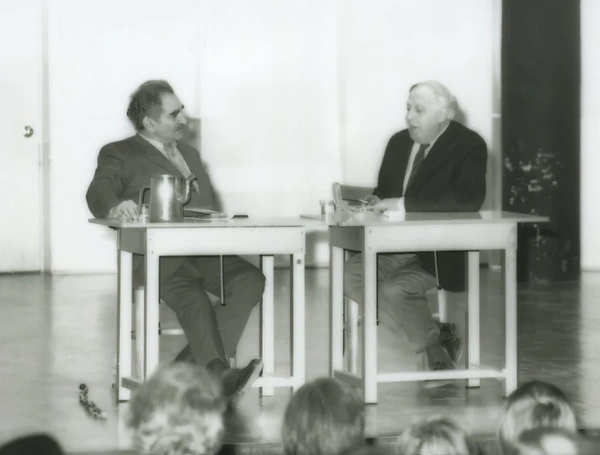
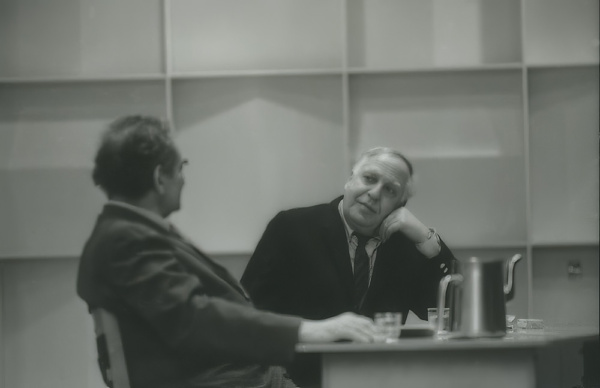
Studio Notes 1970-78
Essay
Guston kept a pad of yellow legal sheets in his studio rolltop desk, on which he penciled notes to himself, ideas for pictures, letters, and sometimes sketched images for later development. The present selection of those writings was made by Musa Mayer during research for her book Night Studio.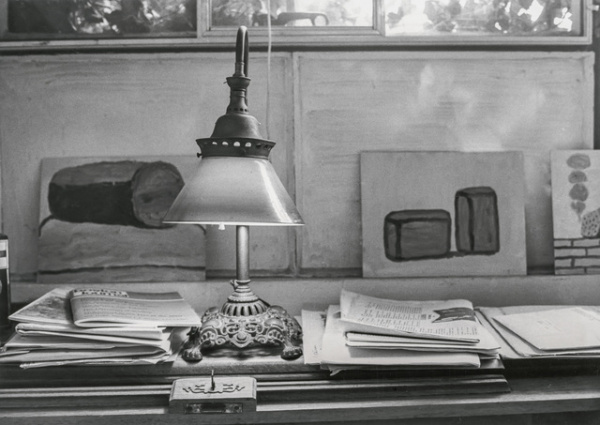
The Appointment (A True Story), 1974
Essay
Once there were two Philips who were friends. One was a very famous writer, a celebrity, the other a painter who had some degree of fame. Philip the Painter, who lived in the mountains and whose solitude was always being interrupted by the telephone, decided to put a stop to this thievery of time.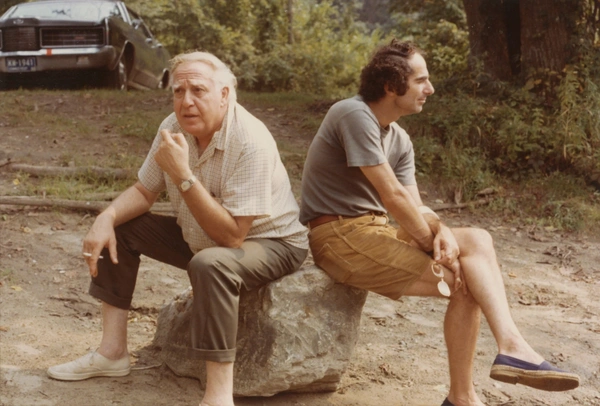
On The Nixon Drawings
Lecture
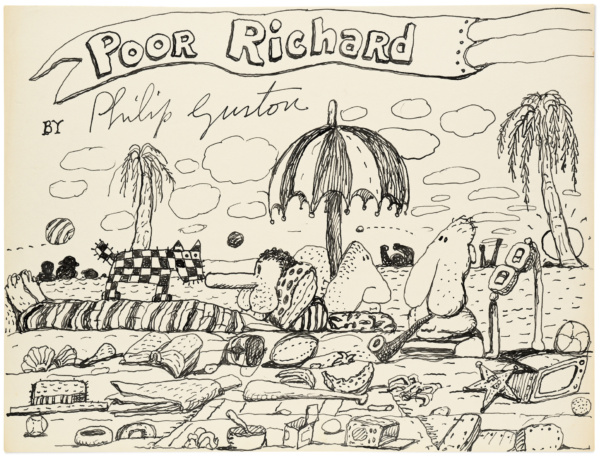
When I came back from Europe in the summer of I97I, I was pretty disturbed about everything in the country politically, the administration specifically, and I started doing cartoon characters. And one thing led to another, and so for months I did hundreds of drawings and they seemed to form a kind of story line, a sequence.On Piero della Francesca
Lecture
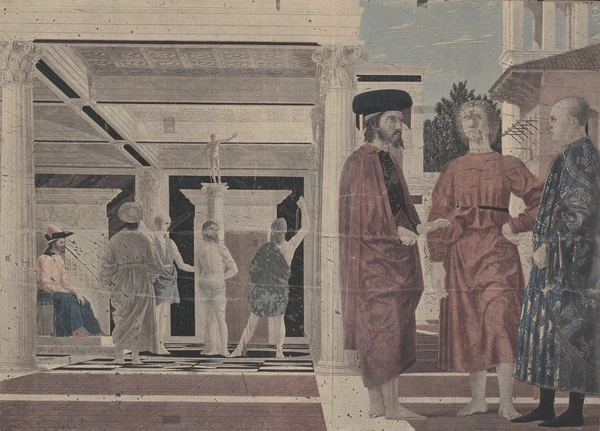
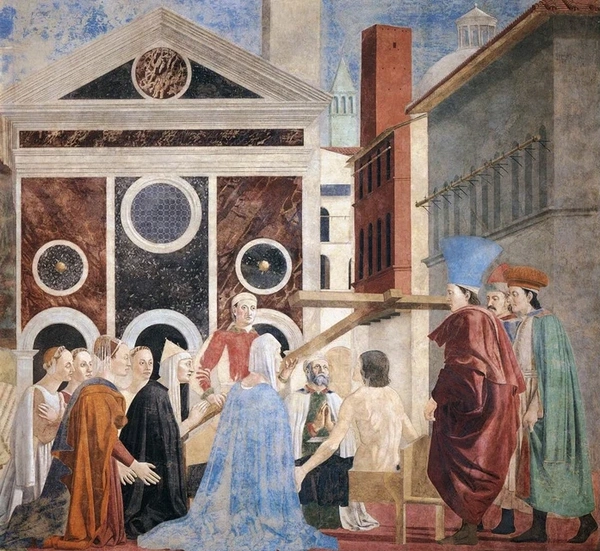
I'm not an art historian and I'm not going to go into his life. It's not going to be a lecture on his work. I just want to point out certain elements in his work that have kept me under his spell, which, as I said, doesn't seem to diminish. On the contrary, it seems to expand and grow.